
Democracy Doesn’t Happen Every November: Why Year-Round Organizing Matters

Every election cycle, communities get flooded with reminders to register, vote, and participate. Then those efforts disappear almost as quickly as they showed up.

Democracy doesn’t start on Election Day, and it doesn’t end there either.

Strong civic participation is built through relationships, trust, and consistent engagement. The organizations that create lasting change aren’t the ones who mobilize communities every two or four years — they’re the ones who show up every month, listening to residents, developing leaders, and creating real pathways for people to participate in civic life long before a ballot shows up in front of them.

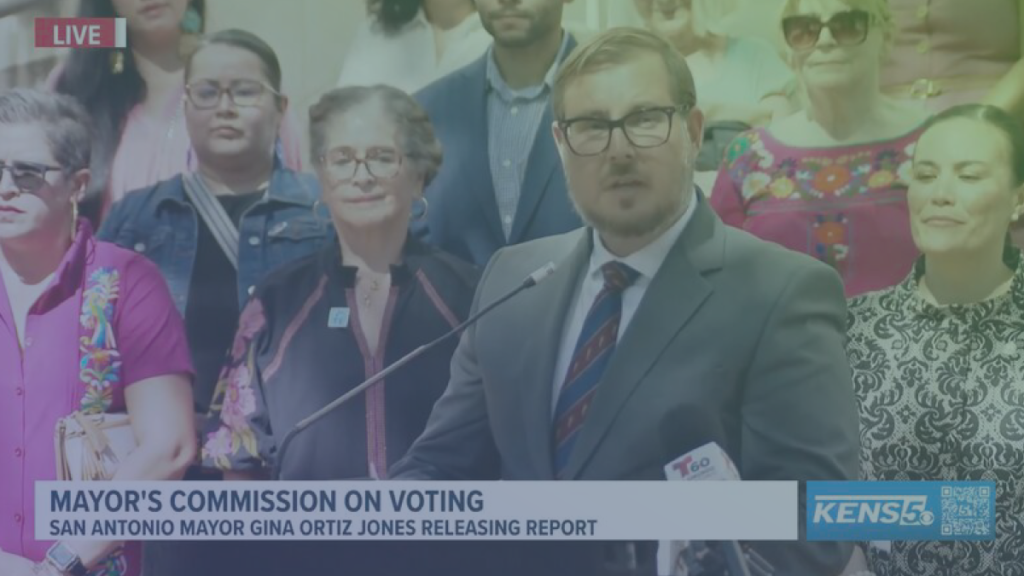
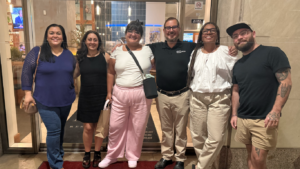
That was one of the clearest lessons from my recent personal work facilitating the Mayor’s Commission on Voting in San Antonio. In May 2026, Mayor Gina Ortiz Jones formed the advisory body and asked me to support the Commission’s work. In less than 60 days, twelve Commissioners examined barriers to participation, reviewed research from across the country, and heard directly from community members and practitioners. One theme kept surfacing: Voter participation reflects the health of a community’s civic infrastructure.

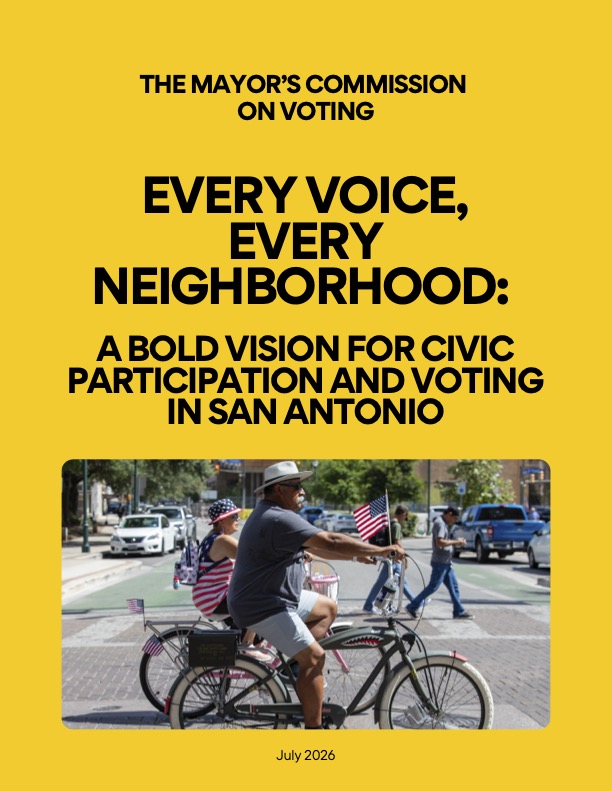
The Mayor’s Commission on Voting released its initial report in early July, recommending nine reforms to improve voter registration, voter education, and voter participation through year-round civic engagement efforts. Their important work has been met with calls to renew civic engagement efforts across the city. Read the Commission’s full report here

Communities with strong civic organizations, neighborhood associations, trusted nonprofits, faith institutions, and grassroots leaders tend to see stronger civic engagement overall.

Voting isn’t an isolated act. It’s usually the result of people feeling connected to their neighbors, informed about local issues, and confident their voice actually matters.

That has implications that go well beyond elections.

At BRIDGE, our work is building the infrastructure that makes democracy possible. We invest in leaders and organizations rooted in community, ones capable of sustaining long-term relationships instead of just launching short-term campaigns. Whether an organization is organizing parents around public education, engaging rural Texans on local issues, supporting immigrant communities, or developing young leaders, each one is strengthening the civic fabric that makes democratic participation more resilient.

That matters more than ever in today’s philanthropic landscape. Across the sector, organizations are navigating real uncertainty — funding is more competitive, and funders are asking harder questions about sustainability, basebuilding, and long-term impact. Election-year investments are still very important, but there’s growing recognition that funding tied only to election cycles can’t build lasting civic power on its own.

The organizations best equipped to meet this moment are the ones with continuous engagement in their communities. They cultivate leaders year-round. They respond to emerging needs and adapt as circumstances change. They build trust that can’t be manufactured through last-minute outreach. They aren’t just preparing for the next election — they’re strengthening the conditions that make a healthy democracy possible every day.

For philanthropy, that’s an opportunity to rethink what impact looks like. Supporting year-round organizing means investing in leadership development, organizational capacity, community relationships, and local infrastructure. Those investments won’t always make headlines, but they build the foundation that lets communities respond effectively when critical moments arrive.

For civic organizations, it’s a reminder that every conversation, training, community meeting, and leadership opportunity matters. The work done between election cycles is often what determines whether a community is ready to participate when it counts.

Democracy isn’t an event. It’s a practice — built neighborhood by neighborhood, relationship by relationship, leader by leader. BRIDGE is committed to supporting the organizations doing this work every day, not because the next election is around the corner, but because healthy democracies need strong communities every day in between.

Picture of H. Drew Galloway, Founder & Executive Director

H. Drew Galloway, Founder & Executive Director

H. Drew Galloway catalyzes change, infusing grassroots growth with strategic direction at BRIDGE. Formerly leading MOVE Texas, his expertise lies in voter engagement and nurturing progressive leadership across Texas.

Discipline Is the Difference Between Vision and Impact

In one of his most enduring messages on leadership, President Barack Obama makes a simple but demanding point: real progress doesn’t come from bursts of inspiration—it comes from discipline. The ability to stay focused, to do the work consistently, and to align your actions with your long-term goals is what separates intention from impact.
For nonprofit founders and organizational leaders, this isn’t just personal advice but an operating principle. The challenges facing our communities are too complex, and the stakes too high, for scattered effort or reactive leadership. Discipline shows up in how we prioritize, how we structure teams, and how we execute, day in and day out.
At BRIDGE, we know that strategic and operational discipline are what it takes to allow a network of organizations to move as one. Together with partners like Texas Future Project, Texas for All, Texas Youth Power Alliance, The Pipeline Initiative, Everybody Votes, and many others across the state, BRIDGE and our 40 alumni organizations are building people power.

Read More »