New to the Movement; Seasoned in the Fight

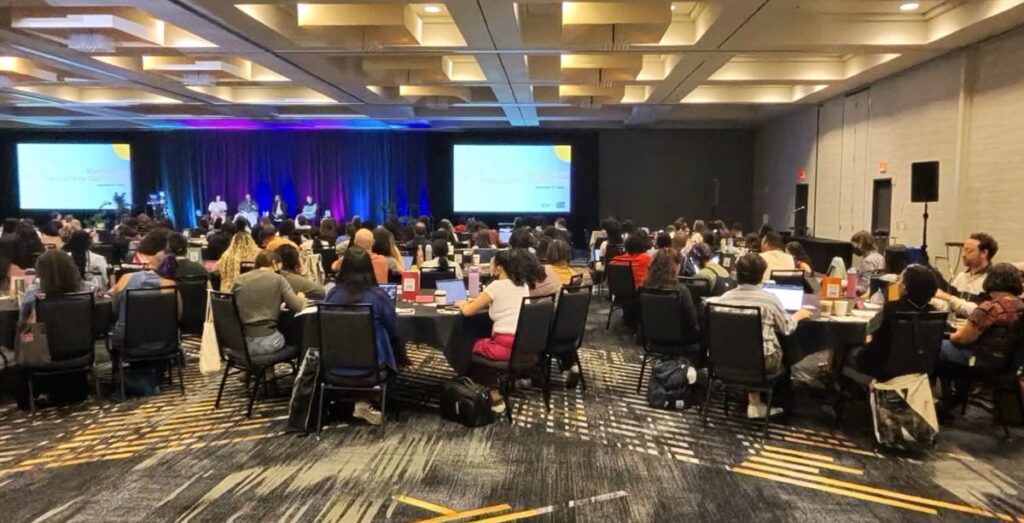
Recently, I had the privilege of attending the Movement Operations Gathering and the subsequent Power Protect Operations Network convening in Oakland. As someone new to the “movement space” but not new to nonprofit work, I found myself both humbled and deeply energized by the experience.

When I say the movement, I’m speaking of the broad and interconnected work of social justice, civic engagement, and democracy building. It is the effort of organizers, advocates, operational leaders, and communities working together to not just respond to immediate needs, but to transform the very systems that create those needs.

And when I say movement operations, I mean the behind-the-scenes work that makes this possible: building infrastructure, strengthening systems, sustaining staff, managing resources, and holding the organizational backbone steady so frontline leaders can keep moving forward. 

I’ve worked in the nonprofit sector, primarily in direct service meeting immediate needs, supporting individuals and families, building community through outreach, and keeping programs running. Much of that work has looked the same over the decades—people need food, housing, education, coaching, counseling, and care. But stepping into the social justice and civic engagement space revealed something different.

It became clear to me that movement work is the foundation that makes direct service possible. It is the structural strategy. Not in a hierarchical sense, but in a way that affirms their necessary connectivity. Direct service responds to urgent needs, but movement work pushes for systemic change, so those needs are not endlessly repeated. One cannot exist without the other. The movement is not a single organization or campaign, it is the collective struggle for equity, dignity, and true democracy. It is the heartbeat behind direct service, the structure behind advocacy, and the resilience that keeps us pressing forward despite setbacks.

What is clear now more than ever is real change is in legislation. If we want transformation that lasts, we must change the systems and structures themselves, ensuring change is first obtained, then working to sustain it. For me, that looks like three essential stages:

  • Build: recognizing the need and laying a foundation. (at times this could mean demolition of what currently exists and starting over)
  • Cultivate: doing the work to grow and strengthen what has been built.
  • Sustain: change may bring grief much like an end will, but when we maintain our momentum, we can see the cycles of change.

How we build

On our first day, panel participants used barbed wire and bamboo metaphors to describe the different ways systems and people respond to pressure. Barbed wire resists, entangles, and cuts those who encounter it. Bamboo, on the other hand, bends, adapts, and survives storms while staying rooted. Those images stayed with me, it reminded me that in this work, we must be both strong and flexible, and hold our ground without breaking.

One panelist went further, sharing a story about repurposing barbed wire as a communication tool. A story was shared about rural Americans in the late 19th and early 20th centuries who used existing barbed wire fences as makeshift telephone lines. What was designed to divide and wound became a means of connection across vast distances. That imagery hit me hard: in our work, the very things that harm us can sometimes be reshaped into strategies that build bridges, create dialogue, and sustain communities.

In the movement, when our strategies get cut or tangled, the lesson of barbed wire is this: we are called not only to endure but also to reimagine, transforming barriers into tools of connection.

How we cultivate

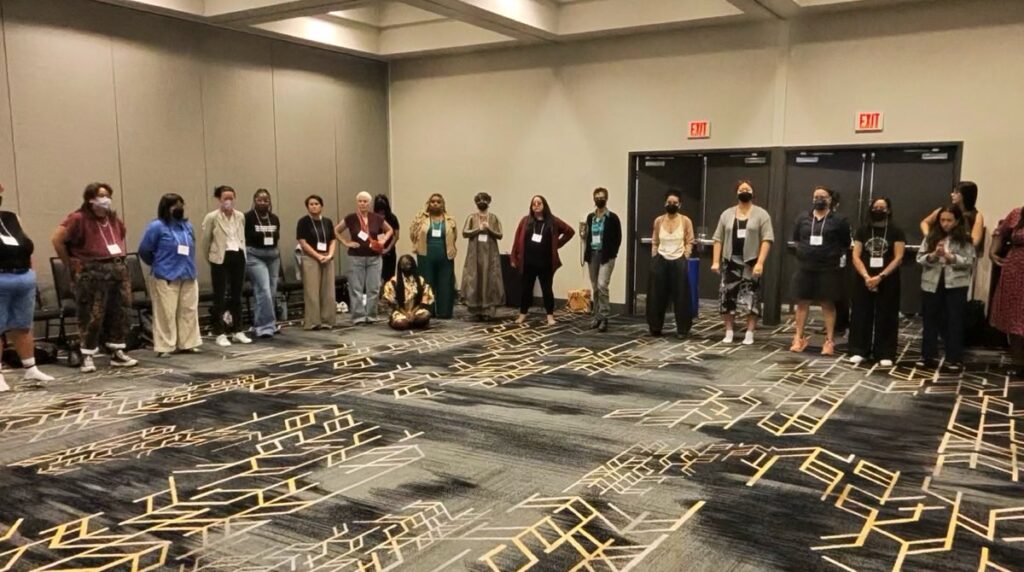
Another very memorable session for me was a session called Somatic: Emotional Resilience As Strategy. The somatic session on rowing took that metaphor into the body. As we rowed together, I could feel what it meant to move in sync, to share effort, and to keep rhythm even when tired. It wasn’t about perfection, it was about connection. That simple act captured the essence of collective movement work: progress depends on how we move together.

One of the most powerful moments came when the facilitator began to call out our differences, using something as simple as the colors in our clothing, with instructions for certain groups to stop rowing at different intervals. Each pause shifted the rhythm, the weight, and the energy in the room. And when those groups were added back in, we could feel the lifting and rebalancing of the collective.

There was one participant who noted that her “difference” had not been called, which meant she had to row the entire time. She shared how tiring it was, only to later discover she did in fact have one of the called-out colors on, she simply hadn’t noticed. That realization was striking: how often do we, in movement work, become so focused on the fight that we don’t recognize the times we’ve been given permission to rest, but keep working anyway?

The rowing reminded me that rest is not just allowed; it is necessary. We must listen for our permissions, accept the opportunities to pause, and trust that when we rejoin the work, the whole will be lifted. As leaders, organizers, and nonprofit professionals, it’s easy to slip into a posture of always working for the people. But these convenings reminded me that I am people too. My role is not separate from the community I serve; I am deeply connected to it. And in that connection lies both responsibility and relief.

How we sustain

Another thread running through my reflections is the process of grief. Not just grief in the way we often think of it, loss of life, but grief as a response to loss, period.

In the movement, we grieve projects that collapse, coalitions that fracture, victories that slip away. We grieve when hope is deferred, when something alive and growing moves beyond our grasp.

How do we hold grief when it isn’t final, when the work continues, but the outcome feels broken? We deal with it by repurposing our strategies, taking the barbed wire and making it a tool. We breathe life into depleted staff and weary organizers. We start over from scratch, again and again.

Do we stop? No.

We rest, but we do not quit.

Operations is resilience

Operations is not secondary to the fight, it is part of the fight. It is protection, resilience, and strategy in action. Although I am new to the movement operations space, I am not new to the fight. Decades in direct service has given me perspective, persistence, and passion. What this gathering affirmed for me is that my work does not stand apart from the broader struggle for justice. Instead, it is interwoven, like bamboo roots beneath the surface, strengthening the whole ecosystem.

I left these convenings fortified. Fortified by the connections across the globe, by the strategies shared, by the stories told. Fortified by the reminder that operations is more than administration—it is movement work, it is protection, it is resilience.

I may be new to movement operations, but I am not new to the fight. We can bend, we can grieve, and we can rest. But we do not break, and we do not quit.

Democracy Doesn’t Happen Every November: Why Year-Round Organizing Matters

Every election cycle, communities get flooded with reminders to register, vote, and participate. Then those efforts disappear almost as quickly as they showed up.

Democracy doesn’t start on Election Day, and it doesn’t end there either.

Strong civic participation is built through relationships, trust, and consistent engagement. The organizations that create lasting change aren’t the ones who mobilize communities every two or four years — they’re the ones who show up every month, listening to residents, developing leaders, and creating real pathways for people to participate in civic life long before a ballot shows up in front of them.

Read More »

Discipline Is the Difference Between Vision and Impact

In one of his most enduring messages on leadership, President Barack Obama makes a simple but demanding point: real progress doesn’t come from bursts of inspiration—it comes from discipline. The ability to stay focused, to do the work consistently, and to align your actions with your long-term goals is what separates intention from impact.
For nonprofit founders and organizational leaders, this isn’t just personal advice but an operating principle. The challenges facing our communities are too complex, and the stakes too high, for scattered effort or reactive leadership. Discipline shows up in how we prioritize, how we structure teams, and how we execute, day in and day out.
At BRIDGE, we know that strategic and operational discipline are what it takes to allow a network of organizations to move as one. Together with partners like Texas Future Project, Texas for All, Texas Youth Power Alliance, The Pipeline Initiative, Everybody Votes, and many others across the state, BRIDGE and our 40 alumni organizations are building people power.

Read More »